



The best innovation happens between industries because companies pull ahead when they borrow ideas from places their competitors never think to look.
The biggest breakthroughs happen where industries intersect: ideas are transferred, then transformed.
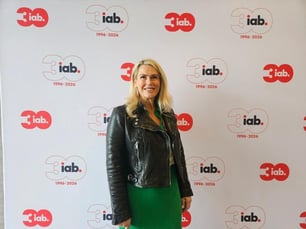
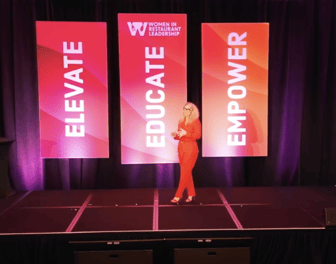
As CEO of AiOpti, I’ve had the privilege of spending 2026 in rooms that, on paper, have almost nothing in common. One week I’m speaking at MediaPost about AI-powered marketing. The next, I’m listening to restaurant executives discuss customer retention challenges and labor shortages at the Women in Restaurant Leadership Forum. Then I’m on stage with destination CEOs at a Tourism Cares Conference talking about community trust and sustainable tourism, followed by conversations with researchers, retailers, healthcare innovators, hospitality leaders, and digital marketers at the Interactive Advertising Bureau (IAB) Conference.
Different Industries, Same Challenges
Different industries. Different jargon. Different acronyms.
The exact same challenges.
After enough airports, keynotes, panels, dinners, and hallway conversations, a pattern becomes impossible to ignore: innovation no longer belongs to any single industry. The biggest breakthroughs are happening where industries intersect.
Restaurants are becoming technology companies, healthcare is becoming a customer experience business, retailers are becoming media networks, and destinations are becoming data organizations.
And AI? AI is quietly becoming everyone’s newest coworker.
The companies pulling ahead aren’t necessarily the ones with the biggest budgets. They’re the ones willing to borrow ideas from places their competitors never think to look.
One of my favorite examples came from a global shipping executive who admitted they had completely reimagined their customer loyalty strategy after studying airline baggage processes, not competitors. A healthcare organization borrowed hospitality principles to improve patient satisfaction. A tourism organization adopted retail attribution models to better measure visitor behavior. None of these innovations were invented. They were transferred. And then transformed.
That’s the future.
At Harvard during my extensive executive education courses, one lesson that has stayed with me is that competitive advantage is rarely about having all the answers. It’s about asking better questions than everyone else. Being unapologetically curious.
And using J.W. Marriott Jr.’s favorite words “What do you think?” more and more every day.
Today, my favorite question is simple: “Who’s solving this problem in a completely different industry?”
That question has become one of the greatest innovation accelerators I know. It also reminds me why conferences still matter in an increasingly digital world.
Yes, we can watch keynote recordings online, yes, AI can summarize every presentation before we break for lunch.
But AI still can’t replace the spontaneous hallway or virtual conversation that changes your strategy. It can’t recreate the dinner where someone casually shares an idea that completely reframes your thinking. It can’t replicate the energy of sitting next to someone whose business looks nothing like yours, until you realize you’re solving exactly the same problems.
Those collisions of ideas are where transformation begins.
Across nearly every conference I’ve attended this year, and I have attended 11 so far, one theme has echoed louder than any discussion about artificial intelligence, privacy, data, or measurement.
Curiosity Over Expertise
Leadership is becoming less about expertise and more about curiosity.
The best CEOs aren’t trying to know everything.
They’re trying to learn from everyone.
As marketers, we’ve spent decades benchmarking against competitors. I think the next decade belongs to organizations willing to benchmark against completely different industries.
Because disruption rarely sends a calendar invite.
It usually walks in wearing someone else’s name badge.
So, I’ll keep attending conferences that make me slightly uncomfortable. I’ll keep listening to industries outside my own. And I’ll keep believing that the next great idea for tourism may come from grocery, healthcare, restaurants, or retail.
Innovation isn’t about looking further ahead. Sometimes it’s simply about looking next door. And if 2026 has taught me anything, it’s this: The future belongs to leaders who collect ideas more aggressively than they collect business cards.
.png?height=245&name=Blog%20Hero%20Images%20(4).png)
.png?height=245&name=Blog%20Hero%20Images%20(5).png)
.png?height=245&name=Blog%20Hero%20Images%20(2).png)